
About Staffordshire
An Overview of Staffordshire
Staffordshire, located in the heart of England, is a landlocked county that boasts a rich tapestry of history, culture, and natural beauty.
Geographically, it borders several key regions, including the West Midlands to the south, Cheshire and Shropshire to the west, and Derbyshire to the north, making it an integral hub for both transport and commerce. The strategic location of Staffordshire has historically made it a significant area for trade and industry, particularly during the Industrial Revolution.
The county is home to major towns and cities, including the bustling city of Stoke-on-Trent, renowned globally for its fine pottery and ceramics. This city, often referred to as the "Potteries," symbolizes the industrial prowess of Staffordshire and is a point of pride for its residents. Other notable towns such as Stafford itself, Lichfield, and Tamworth offer a blend of historical richness and modern living. Lichfield, for instance, is famous for its stunning cathedral, a testament to the county's architectural heritage.
Moreover, Staffordshire is distinguished by its diverse landscapes, ranging from scenic countryside to bustling urban centres. The county's geographical features include the picturesque Cannock Chase, which is recognized as an Area of Outstanding Natural Beauty, drawing nature lovers and outdoor enthusiasts alike. Furthermore, the presence of major waterways, including the Trent and Mersey Canal, enhances the county's charm, providing both recreational opportunities and historical significance.
In addition to its natural beauty and historical landmarks, Staffordshire has a vibrant cultural scene. The region hosts various festivals, arts events, and sporting activities, underscoring the community's dynamic spirit. Thus, Staffordshire stands not only as a geographical entity within the UK but also as a region rich in cultural heritage and community values.
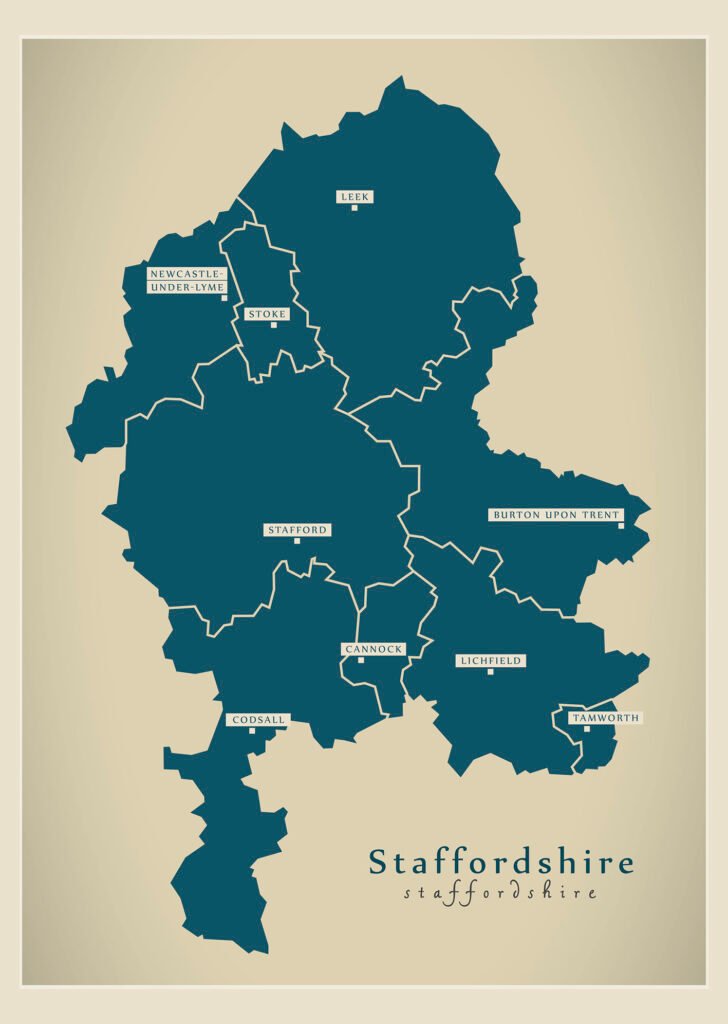
Map of Staffordshire
A Brief History of Staffordshire
Staffordshire has a rich and diverse history that can be traced back to prehistoric times. Evidence of early settlers, including Neolithic and Bronze Age artifacts, indicates that the region was inhabited thousands of years ago. The Romans later recognized the strategic importance of Staffordshire, establishing a significant presence and leaving behind remnants of their influence, notably in the form of roads and settlements such as Cambs, now known as Chesterton.
During the Anglo-Saxon period, Staffordshire became an integral part of Mercia, one of the major kingdoms of England. This era was marked by the establishment of several key monasteries, particularly the famous Minster at Lichfield, which became a center of learning and culture. The region's economy flourished primarily through agriculture and the burgeoning craft industries. As the Middle Ages approached, Staffordshire emerged as a notable area for pottery production, particularly with the rise of the renowned Staffordshire pottery industry in the 17th and 18th centuries.
The Industrial Revolution in the 19th century brought significant change to Staffordshire, transforming it into an industrial hub. The establishment of coal mining, ironworks, and ceramic manufacturing shaped the economic landscape and attracted a diverse population. Key figures such as Josiah Wedgwood and Matthew Boulton played pivotal roles in advancing the ceramics industry, exporting Staffordshire products globally and cementing the county's reputation as a leader in the field. Today, the county continues to celebrate its industrial heritage while blending with modern developments.
Throughout the 20th century and into the 21st, Staffordshire has evolved into a vibrant region that balances historical significance with contemporary growth. A rich tapestry of cultural influences, coupled with significant historical events, has shaped Staffordshire's identity within England. Understanding this historical backdrop is crucial for appreciating the county's current contributions and its future trajectory.
Climate in Staffordshire
Staffordshire experiences a temperate maritime climate, characterized by mild temperature variations and moderate rainfall throughout the year. The region’s average annual temperature hovers around 9.5°C (49°F), with January being the coldest month, where temperatures can drop to approximately 1°C (34°F). Conversely, July tends to be the warmest month, revealing average temperatures close to 16°C (61°F). These temperature patterns create a relatively pleasant atmosphere, allowing for quite a range of outdoor activities.
In terms of precipitation, Staffordshire receives about 800mm (31 inches) of rainfall annually, with rainfall being well-distributed throughout the seasons. However, late autumn to early winter typically experiences higher levels of precipitation, especially in the form of rain. The region does encounter occasional snowfall during the winter months, though it seldom accumulates significantly. These weather conditions play a vital role in influencing the local flora and fauna, alongside agricultural practices across the county.
The seasonal variations in Staffordshire endorse a dynamic lifestyle for its residents. Spring brings blossoming flowers and milder temperatures, which attract people outdoors to enjoy walking and cycling. Summer often sees residents engaging in leisure activities, including picnics and festivals, leveraging the warmer weather. Autumn paints the landscape in vibrant hues and is often marked by harvest-related events. In winter, while colder temperatures may deter some outdoor pursuits, opportunities for activities such as walking in winter wonderlands remain popular amidst the scenic beauty. Thus, the climate in Staffordshire significantly shapes the lifestyle and recreational choices of its inhabitants, creating a harmonious balance between nature and daily life.
Demographics of Staffordshire
Staffordshire, has a rich and diverse demographic profile. As of the latest census, the region houses approximately 1.1 million residents, reflecting a steady increase in population over recent years. Despite fluctuations in growth rates, the general trend indicates a gradual rise in population size, influenced by factors such as migration and natural growth.
Age distribution within Staffordshire reveals important insights about the community's structure. The population is relatively balanced, with a significant percentage of individuals within the working-age group (ages 16-64), indicating a vibrant labor market. Children and adolescents (ages 0-15) comprise about 20% of the population, while those aged 65 and over account for approximately 19%. This age demographic emphasizes the need for policies that cater to both the youthful population and the aging demographic.
Ethnicity in Staffordshire exhibits a mosaic of cultural backgrounds. Historically, the area was predominantly White British; however, recent census data indicate a gradual increase in ethnic diversity. Ethnic minorities, including Asian, Black, and Mixed heritage populations, now represent a significant portion of the overall demographic. In particular, the South Asian community, largely comprising individuals of Indian, Pakistani, and Bangladeshi descent, has established a notable presence in urban centers like Stoke-on-Trent.
Cultural diversity in Staffordshire is further enriched by a variety of languages spoken within the region. The local government and community organizations have recognized this multicultural fabric, implementing inclusive strategies that promote harmony and continual engagement among diverse groups. Understanding the dynamics of Staffordshire's demographics is essential for fostering an inclusive community that meets the diverse needs of its residents. Overall, these demographic trends serve as valuable indicators of the evolving community dynamics, reflecting both growth and inclusivity.
Economy of Staffordshire
Staffordshire, located in the heart of England, serves as a vital hub for various industries contributing to the regional and national economy. Historically known for its pottery and ceramics, the county has diversified its economic base over the years. Today, the economy of Staffordshire is characterized by a mix of manufacturing, services, and technology sectors. Major employers in the area include global companies that engage in advanced manufacturing, engineering, and digital services, which have been instrumental in driving local economic growth.
One of the cornerstone industries in Staffordshire remains manufacturing, particularly in the production of ceramics, automotive components, and aerospace products. Firms such as Wedgwood and JCB have deep roots in the county, providing significant employment opportunities. The automotive sector, represented by giants like Toyota and Aston Martin, also plays a critical role in Staffordshire's economy, with innovations in green technology and electric vehicles shaping the future of manufacturing in the region.
The services sector has also expanded notably, with businesses in healthcare, retail, and education contributing significantly to employment rates. The presence of institutions such as Staffordshire University supports the development of a skilled workforce, further enhancing the area's appeal to prospective employers.
Economic growth trends in Staffordshire reflect a robust recovery post-pandemic, with various initiatives and investments aimed at fostering business development and attracting new ventures. The region has seen an influx of investment in infrastructure, enhancing connectivity and supporting commerce. Recent developments, such as the establishment of the Staffordshire Business Hub, promote entrepreneurship and innovation. As a result of these factors, Staffordshire continues to demonstrate potential for sustained economic growth, positioning itself as a dynamic environment for businesses and job seekers alike.
Tourism and Attractions in Staffordshire
Staffordshire offers plenty of tourist attractions and recreational opportunities, making it a compelling destination for visitors seeking cultural and natural experiences. The region is renowned for its historical sites, which encompass a variety of castles, museums, and landmarks that reflect its storied past. Notably, the historic town of Stafford boasts the impressive Stafford Castle, which dates back to the Norman period. Visitors can explore the ruins and enjoy panoramic views of the surrounding landscape, firmly positioning Staffordshire as a significant location for history enthusiasts.
In addition to historic sites, Staffordshire is home to several beautiful parks and natural reserves, ideal for those looking to immerse themselves in nature. The Peak District National Park, which partially extends into Staffordshire, provides breathtaking scenery, hiking trails, and opportunities for outdoor activities such as rock climbing and cycling. Furthermore, Cannock Chase Area of Outstanding Natural Beauty is an escapade for outdoor lovers, featuring lush woodlands and diverse wildlife, which contribute to the region's environmental appeal.
Local festivals and events also play an essential role in showcasing Staffordshire's culture. The annual Staffordshire Hoard Festival celebrates the discovery of the largest hoard of Anglo-Saxon gold ever found, offering exhibitions and activities that highlight the region’s rich heritage. Similarly, events like the Lichfield Festival bring together music, theatre, and art, immersing visitors in the local cultural scene.
By exploring these diverse attractions, tourists can gain an appreciation for Staffordshire's unique blend of historical significance and natural beauty. Whether one is captivated by the allure of ancient structures or the charm of local festivities, Staffordshire undeniably presents a multitude of opportunities for enriching experiences that resonate with visitors of all interests.
Education and Institutions in Staffordshire
Staffordshire boasts a diverse educational landscape that accommodates learners of all ages and backgrounds. The area is home to a variety of primary and secondary schools, which are operated by both local authorities and independent bodies. Many of these schools have been recognized for their high academic standards, benefitting from dedicated teaching staff and supportive communities. For instance, several primary schools in Staffordshire have achieved ratings of 'outstanding' from regulatory bodies, reflecting their commitment to fostering a positive learning environment.
Beyond primary and secondary education, Staffordshire is equipped with a selection of colleges that provide a range of vocational courses and further education opportunities. Colleges such as South Staffordshire College and Newcastle-under-Lyme College offer programs in disciplines including arts, sciences, and technology, thus catering to the needs of students looking for diverse pathways post-secondary education. These institutions not only focus on academic achievement but also emphasize skills development, preparing students for employment or higher education.
Higher education in Staffordshire is notably represented by Staffordshire University, which offers a wide array of undergraduate and postgraduate programs across various fields. The university is characterized by its strong emphasis on practical and career-focused education, often collaborating with local businesses to provide students with real-world experiences. With an expansive campus located in Stoke-on-Trent, Staffordshire University fosters a vibrant community that encourages both academic and personal growth.
The educational system in Staffordshire also supports lifelong learning through numerous adult education programs, tailored for those looking to enhance their skills or explore new interests. Various community centers and organizations offer workshops and classes, allowing residents to engage in continued education and professional development opportunities. Overall, the educational landscape in Staffordshire is dynamic, providing quality institutions that meet the varied needs of its population.